

 Uganda is known as a land gifted by nature because of its rich wildlife, green landscapes, and protected areas. The country has ten national parks managed by the Uganda Wildlife Authority. These parks protect endangered species, unique habitats, and important water sources. Some of the most visited parks on Uganda tours include Bwindi Impenetrable National Park, Queen Elizabeth National Park, Murchison Falls National Park, and Kidepo Valley National Park.
Tourism plays a major role in supporting conservation in these parks. However, human presence and human footprint can influence how animals use space. As more visitors, lodges, vehicles, and roads enter protected areas, wildlife behavior can change. This article examines how human activity affects animal space use in Uganda’s national parks and what this means for conservation and sustainable tourism.
Understanding Human Presence and Human Footprint
Human presence refers to the physical presence of people inside or near wildlife habitats. This includes tourists on game drives, researchers, park rangers, and local communities living close to park boundaries. Human footprint goes further. It includes roads, lodges, campsites, vehicle tracks, noise, waste, and even light at night.
In Uganda, tourism has grown steadily over the years. Gorilla trekking in Bwindi Impenetrable National Park and wildlife safaris in Queen Elizabeth National Park attract thousands of visitors each year. While tourism brings income and jobs, it also increases traffic and infrastructure inside protected areas.
Animals are sensitive to change. Even small increases in noise or movement can influence where they feed, rest, or breed.
Changes in Animal Movement Patterns
Research in several Ugandan parks shows that animals often shift their movement patterns in response to human activity. In areas with frequent vehicle traffic, some species move further away from main roads during the day.
In Murchison Falls National Park, elephants and buffaloes have been observed avoiding areas with heavy safari vehicle activity during peak tourism hours. Instead, they may move to quieter parts of the park or become more active at night. This shift can affect feeding routines and energy use.
Predators such as lions in Queen Elizabeth National Park also respond to human presence. In the Kasenyi plains, where game drives are common, lions sometimes rest in thicker vegetation during busy hours. They may hunt later in the evening when tourist vehicles are fewer.
These changes show that wildlife adapts, but adaptation does not always mean there is no stress. Constant disturbance can increase energy expenditure and reduce feeding time.
Effects on Feeding and Breeding Areas
Human footprint can also affect where animals choose to feed and breed. When new lodges are built or new tracks are opened, wildlife may avoid these zones. Even low-level disturbance can cause sensitive species to move away from preferred habitats.
In Bwindi Impenetrable National Park, mountain gorillas are closely monitored. Gorilla trekking is strictly regulated, with limited numbers of visitors per day. This is done to reduce stress and disease risk. Studies have shown that well-managed tourism can minimize negative impacts. However, gorilla groups that are habituated to human presence may still alter their daily routes slightly to avoid crowded trails.
In open savannah parks like Kidepo Valley National Park, antelope species may avoid water points that are close to busy roads. This can push them into less optimal areas where food or water is limited.
Breeding areas are especially sensitive. Noise and movement can disturb nesting birds or animals with young offspring. If disturbance is repeated, animals may abandon certain sites completely.
Road Networks and Habitat Fragmentation
Roads are one of the most visible signs of human footprint in national parks. They allow tourists to access wildlife areas, but they can also divide habitats. When roads increase, animals may hesitate to cross open tracks due to vehicle noise and movement.
In Queen Elizabeth National Park, the network of game drive tracks around the Mweya peninsula creates zones of high activity. Some species adapt easily, but others avoid these areas, leading to uneven distribution of wildlife.
Habitat fragmentation can reduce genetic exchange if animals avoid crossing certain zones. Over time, this may affect population health.
At the same time, roads are necessary for park management, anti-poaching patrols, and emergency response. The challenge is to balance access with conservation.
Tourism Pressure and Seasonal Variations
Tourism in Uganda often peaks during dry seasons, when wildlife viewing is easier. During these months, vehicle density increases, especially in popular parks.
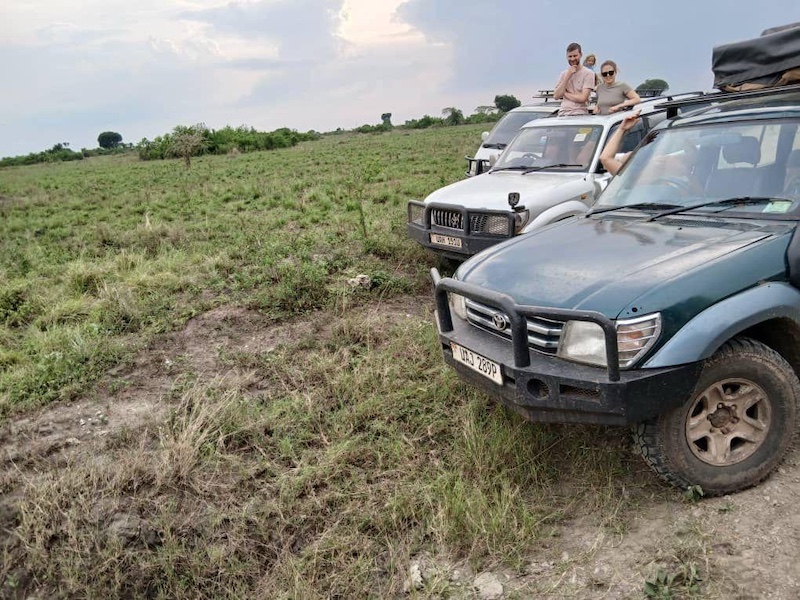
In Murchison Falls National Park and Queen Elizabeth National Park, clusters of safari vehicles sometimes gather around lions or leopards. This concentration can create temporary pressure on animals. Some predators move away quickly, while others appear tolerant but show signs of alertness and stress.
Individual travelers who rent cars for Uganda self-drive safaris also contribute to vehicle numbers, especially during high season. While many follow park rules, inexperienced drivers may approach animals too closely or drive off designated tracks, increasing disturbance.
During low seasons, wildlife often reoccupies previously busy areas. This suggests that reducing pressure during peak times can help maintain balance.
Human Wildlife Conflict at Park Boundaries
Human footprint does not stop at park gates. Communities living near national parks interact with wildlife regularly. As human populations grow, farmland expands closer to park boundaries.
In areas around Bwindi Impenetrable National Park and Queen Elizabeth National Park, elephants and other animals sometimes move into community land in search of food. This can lead to crop damage and conflict.
When wildlife feels pressure inside the park due to tourism or infrastructure, some species may move toward edges, increasing the chance of human-wildlife conflict. Electric fences, trenches, and community awareness programs have been introduced in some areas to reduce this problem.
Conservation efforts must therefore consider both internal park management and surrounding landscapes.
Positive Impacts of Controlled Human Presence
Human presence is not always negative. In fact, controlled tourism can support conservation. Revenue from park fees funds ranger patrols, research, and community projects.
In Bwindi Impenetrable National Park, strict gorilla trekking rules limit visitor numbers and enforce safe distances. This model has helped protect mountain gorillas while generating income for conservation and local communities.
Similarly, regulated game drives in Murchison Falls National Park help monitor wildlife populations. Tour guides and rangers often report animal sightings and unusual behavior, contributing to data collection.
When tourism is well managed, it creates incentives to keep wildlife habitats intact. Lodges that follow eco-friendly practices reduce their footprint through solar energy, waste management, and water conservation.
Wildlife Adaptation and Behavioral Flexibility
Some species show remarkable flexibility. Baboons and warthogs, for example, are often seen near lodges and campsites. They appear to tolerate human presence and may even benefit from food scraps if waste is not properly managed.
However, this adaptation can create new problems. Animals that associate humans with food may become aggressive or dependent. This changes natural behavior and can increase risk for both wildlife and visitors.
Predators that become accustomed to vehicles may allow closer approaches, which improves the tourist experience but may alter natural hunting patterns. Long-term studies are needed to understand whether these behavioral shifts affect survival rates.
Strategies for Sustainable Park Management
To reduce negative impacts on animal space use, park authorities and stakeholders can adopt several strategies.
First, limit the number of vehicles in sensitive zones. Timed entry systems or designated viewing slots can reduce crowding around wildlife.
Second, maintain strict off-track driving rules. This prevents habitat damage and reduces disturbance.
Third, invest in visitor education. Clear briefings at park gates can teach drivers about safe distances, speed limits, and wildlife respect.
Fourth, monitor wildlife movement using GPS collars and camera traps. This helps identify areas where animals are avoiding human activity.
Finally, involve local communities in conservation programs. When communities benefit from tourism, they are more likely to support wildlife protection.
Conclusion
The influence of human presence and footprint on animal space use in Uganda national parks is complex. Wildlife responds in different ways depending on species, habitat, and level of disturbance. Some animals shift their movement patterns, avoid busy roads, or change feeding times. Others adapt more easily but may develop new behaviors linked to human activity.
National parks such as Bwindi Impenetrable National Park, Queen Elizabeth National Park, Murchison Falls National Park, and Kidepo Valley National Park remain strongholds for biodiversity. With careful planning and responsible tourism, it is possible to protect wildlife while allowing visitors to experience Uganda’s natural beauty.
The key lies in balance. Sustainable tourism practices, strong management by the Uganda Wildlife Authority, scientific research, and community involvement can ensure that human presence supports rather than harms conservation. Protecting animal space use is not only important for wildlife health but also for the long-term success of Uganda’s tourism industry.